
A Note To Our Clients: Market Update
As many of you may have noticed, we’re seeing additional volatility in markets in 2026 as recent events have increased uncertainty, which has shown up in the form of lower stock prices. We wanted to send a brief note to provide some context around what’s happening and how we are navigating portfolios.
Heading into 2026, we had talked about the significant outperformance of growth stocks and the need to keep a diversified approach. We expressed this in portfolios by tilting towards value stocks towards the end of 2025. That diversification has helped portfolios be resilient in 2026, with some of those value sectors outperforming technology stocks for January and February of this year.
Nevertheless, with a new fed chair incoming, recent rulings on tariffs from the Supreme Court, and the war in Iran, uncertainty has clearly increased, and markets don’t generally like uncertainty. It is said that markets bottom when uncertainty peaks — the argument is whether or not we have reached peak uncertainty yet.
And while news headlines and short-term market volatility are uncomfortable, there are some positive things to consider when zooming out over the long run.
Oil prices have been a key driver of market volatility in the last two weeks. According to Ritholtz Wealth, the annual return of stocks is not very correlated to the annual return of oil. In fact, in the 13 occurrences where oil prices have increased 5%+ two days in a row since 1990, the S&P500 has been positive a year later 11/13 times, with an average return of +22.8%.
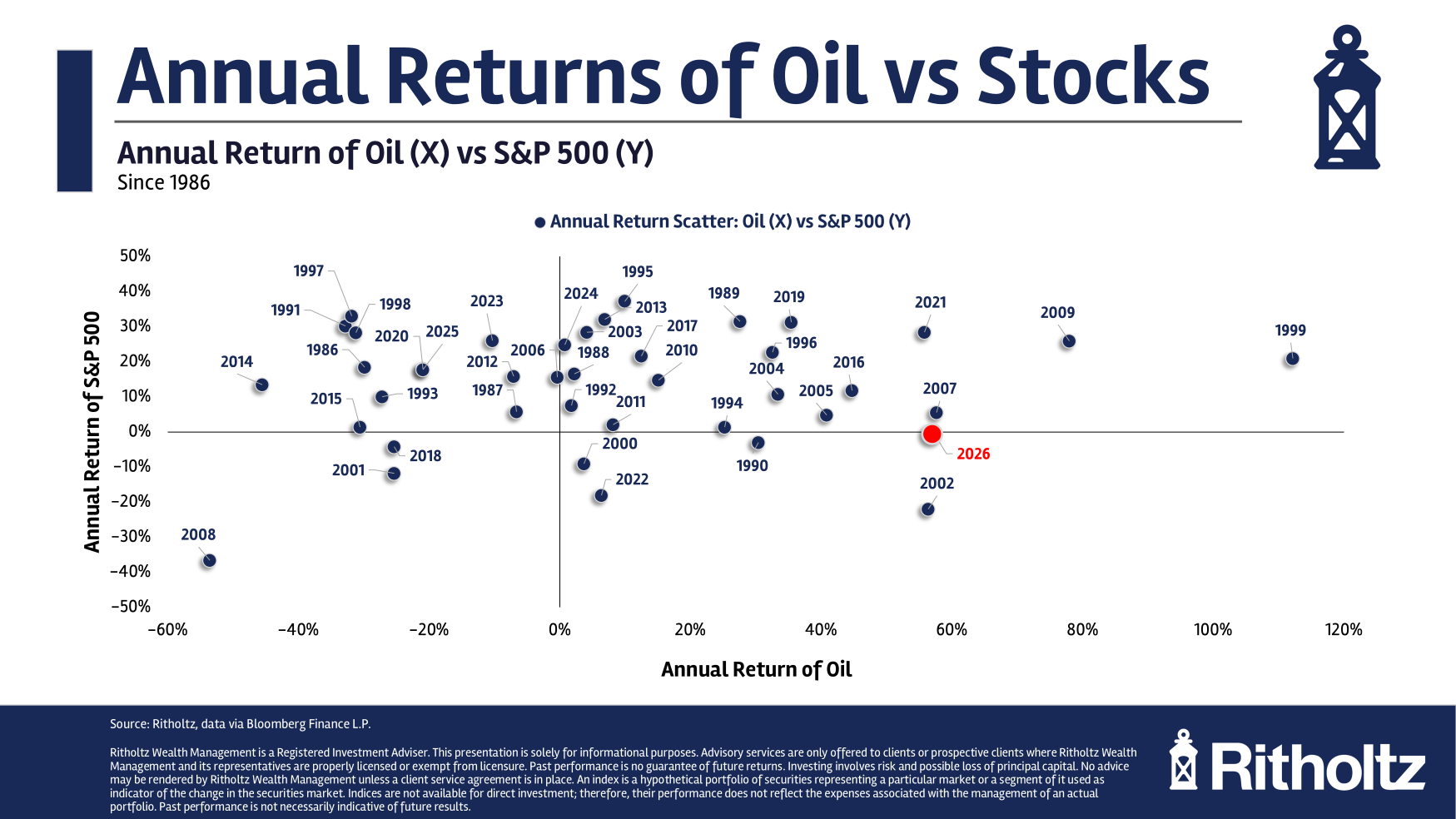
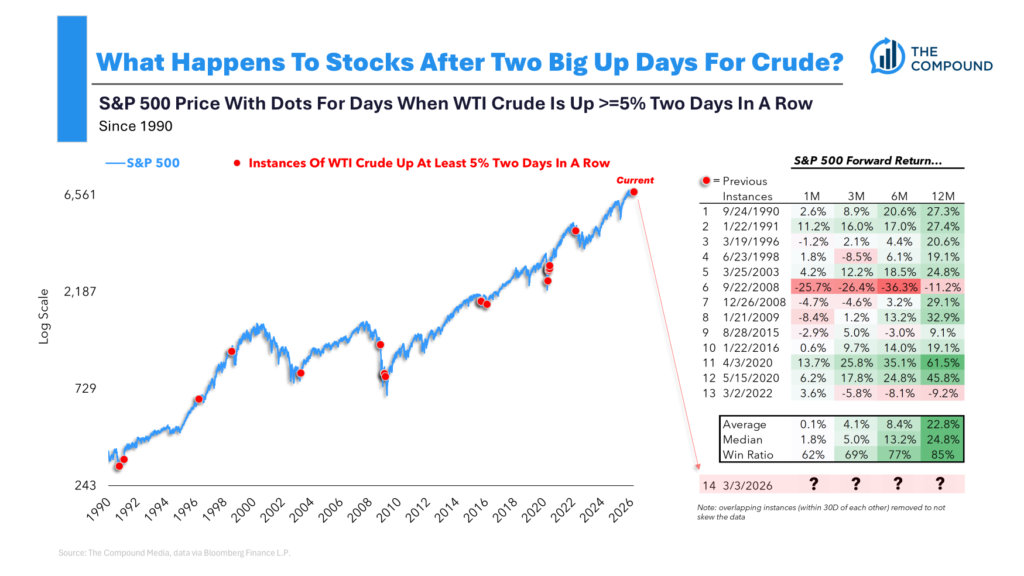
While there are instances where markets were negative a year later, it was more related to the financial crisis (2008) and fed interest rate hikes (2022).
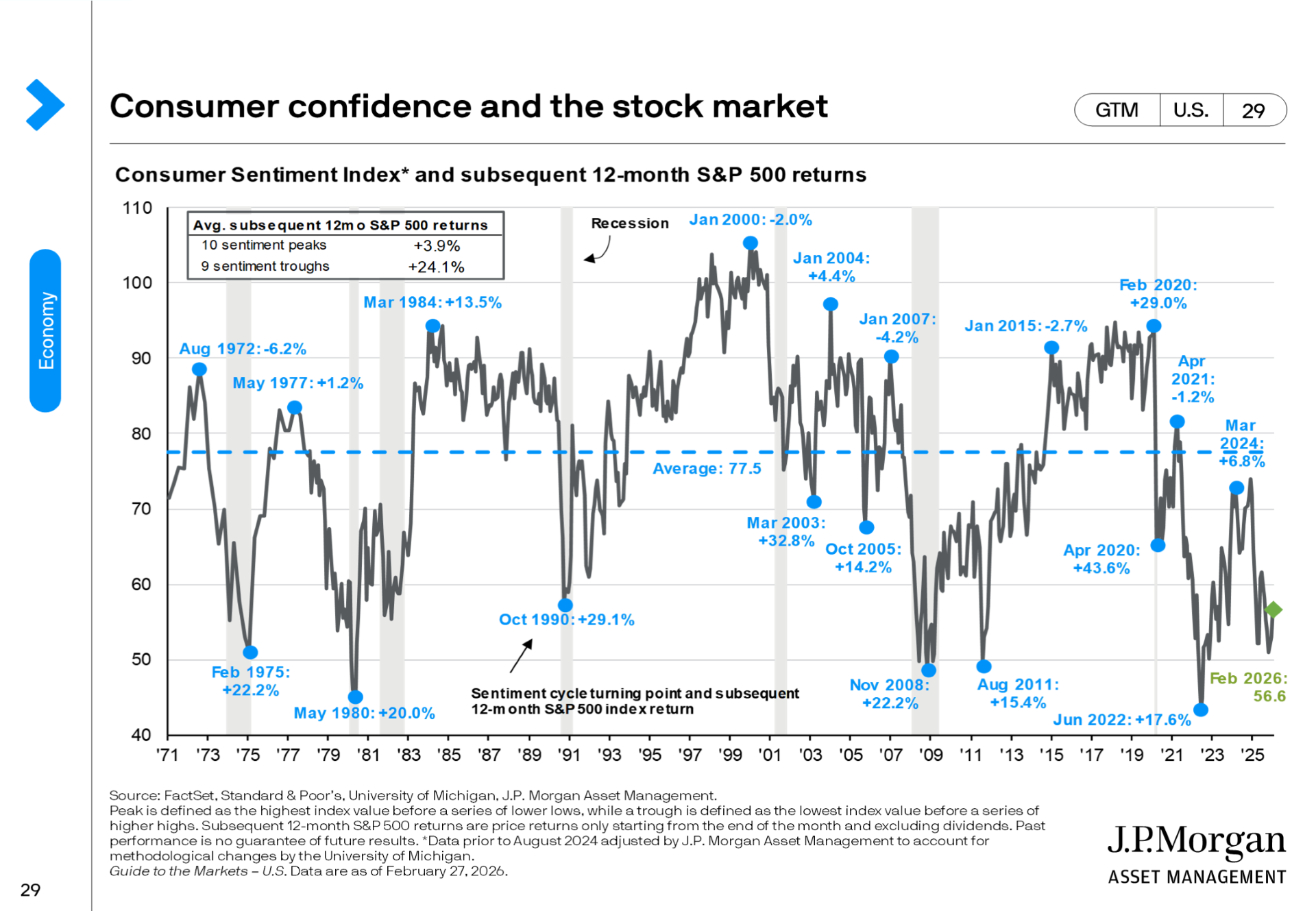
Shifting gears to the US consumer, it is worth noting that consumer confidence has an inverse relationship to stock performance over time. Meaning that, historically speaking, markets tend to do well after periods of weak consumer expectations. According to JP Morgan, the average S&P return 12 months after a low in consumer confidence is +24.1% as compared to just +3.9% when consumers felt great.
And we see that in the real-time data as well — according to a note this week from Bank of America, consumer spending increased to +3.2% year over year in February of 2026, the largest increase in 3 years, and a +0.9% increase from January.
Ultimately, it’s key to remember that those who stay the course have been rewarded over time.
If you have any questions or concerns, please reach out so that we can make sure your financial plan and asset allocation!
Thank you,
Brent Gargano, CFP®
Founder and Financial Advisor of Infinite Wealth Planning


Thanks For Reading! We Hope To See You Again!
For More Updates:

Advisory services offered through National Wealth Management Group, LLC, a Registered Investment Adviser. This information is intended for educational purposes and is not intended as a recommendation to buy or sell securities. Investing involves risk. Before investing, you should consult with a financial advisor to determine how a specific investment strategy fits your personal goals and objectives.